Discover 12 classic Christmas stories and poems to read aloud with children, from familiar favourites to forgotten tales, with a simple 12-day reading plan.

By Elizabeth, Creator of The Reading Lantern
Published November 2026 · Updated November 2026
Most families have a few Christmas stories they know by heart, and finding more classic Christmas stories that are worth reading aloud is harder than it sounds. Here I’ve gathered twelve of my favourites, six short stories and six poems and carols, including several I’ve particularly enjoyed reading with my own children. The collection is designed for children aged 6–9, though the shorter poems and stories can also be enjoyed with younger listeners.
I’ve chosen a mixture of familiar Christmas favourites and less familiar nineteenth-century stories, with different kinds of reading to suit different moods: family comedy, fantasy, generosity, and the traditions surrounding Santa and the Nativity. You’ll find tales by Louisa May Alcott, L. Frank Baum and William Dean Howells, and also flying reindeer, a Christmas tree too tall for the house, a wish that goes comically wrong, and a little girl who gets to see Santa’s workshop for herself.
In my house, I’ve found Christmas a particularly good time to introduce children to poetry. We’re already used to hearing carols and singing verses together, so it’s a natural step to bring a few poems into our reading as well. The rhythm and rhyme invite you to read aloud, and a favourite verse can be enjoyed again and again through the season. If you’re interested in the wider benefits of reading aloud, I’ve written more about why sharing books together is worth making time for.
Alongside the familiar, I hope you’ll discover a few new favourites to share with your family.
12 Classic Christmas Stories and Poems at a Glance
The twelve selections include family comedy, Christmas adventures, Santa verse, a winter carol of generosity and a poem about the Magi. Some will be familiar; others may be new.
| Selection | Author | Type | What to expect |
| Tilly’s Christmas | Louisa May Alcott | Story | A gentle story of kindness and generosity |
| The Peterkins’ Christmas-Tree | Lucretia P. Hale | Story | Family comedy and Christmas mishaps |
| A Kidnapped Santa Claus | L. Frank Baum | Story | A fantasy adventure with magical creatures |
| Little Girl’s Christmas | Winnifred E. Lincoln | Story | A whimsical journey to Santa’s workshop |
| Christmas Every Day | William Dean Howells | Story | A playful tale about a wish gone wrong |
| Why the Chimes Rang | Raymond MacDonald Alden | Story | A reflective story about generosity and faith |
| A Visit from St. Nicholas | Clement Clarke Moore | Poem | A familiar, lively account of Santa’s Christmas Eve visit |
| Old Santeclaus with Much Delight | Anonymous | Poem | An early printed version of the Santa tradition |
| Good King Wenceslas | John Mason Neale | Carol | A narrative carol about kindness and helping others |
| Jolly Old Saint Nicholas | Emily Huntington Miller | Poem and song | A playful poem about a child’s Christmas wishes |
| The Night After Christmas | Anonymous | Poem | A comic take on Christmas overindulgence |
| The Three Kings | Henry Wadsworth Longfellow | Poem | A quiet, reflective poem about the journey of the Magi |
You don’t have to read all twelve. If your child loves Santa, begin with the Santa poems. If your family keeps the Nativity at the heart of Christmas, begin with The Three Kings.
If you’d like to explore these twelve readings with a little more guidance, The Reading Lantern’s Classic Christmas Read-Aloud Collection brings them together with ready-prepared questions and activities.
6 Classic Christmas Stories to Read Aloud
Tilly’s Christmas — Louisa May Alcott
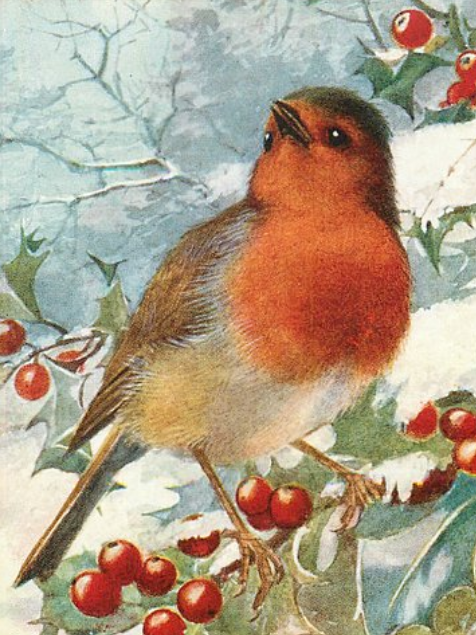
Tilly is a poor little girl who expects very little from Christmas. Walking home from school with two friends, she finds a robin lying helpless in the snow. The other girls had been hoping for a lost purse; Tilly is simply glad to have something to care for. She carries the bird home, and she and her mother make the best of a modest Christmas Eve.
Alcott is best known for Little Women, but this shorter story deserves a place of its own. The contrast between Tilly’s small supper and the festivities at a wealthier house is plain, yet the story never turns bitter. What stays with you is Tilly’s choices, and the kindness of people who have little to spare.
Children who notice animals will take to it at once. The robin gives them somewhere concrete to begin talking.
A question to ask: Tilly has very little herself, but she is quick to help the robin. Would it have been harder if she had been looking forward to presents?
The Peterkins’ Christmas-Tree — Lucretia P. Hale
The Peterkins are determined to have a spectacular Christmas tree, and they begin preparing well in advance. The tree turns out to be too tall for the room. Rather than shorten it, Mr. Peterkin proposes raising the ceiling. Soon the carpenters are in, there is a peculiar hump in Elizabeth Eliza’s bedroom, and the preparations are getting in the way of Christmas itself.
Hale’s Peterkin family appeared in a series of comic stories in the nineteenth century, and their gift is turning small problems into magnificent ones. Children love watching grown-ups reason their way into trouble, and they will usually spot the sensible solution long before the Peterkins do.
A question to ask: At what point should the Peterkins have realised that their preparations were getting out of hand?
A Kidnapped Santa Claus — L. Frank Baum
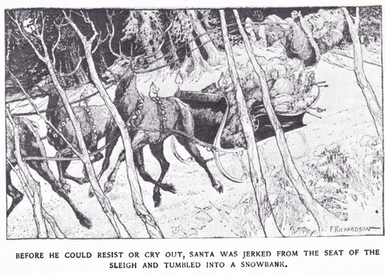
The author of The Wonderful Wizard of Oz gives Santa a whole fantasy world of his own. Santa lives in the Laughing Valley, where fairies and other magical creatures help him make toys. In the mountains nearby live the Daemons, who cannot bear the happiness he brings to children. Their scheme, as the title promises, is to kidnap him.
Baum’s pleasure in inventing creatures and places is on full display, and so is Santa’s character. He is cheerful, generous and terribly hard to tempt into behaving badly, and some of the Daemons’ attempts to sway him are very funny. The Daemons themselves have names like Selfishness, Envy and Malice, which gives older listeners something to think about without spoiling the adventure.
This one suits children who love longer imaginative tales and don’t mind a few unfamiliar names. It’s a little longer, so you may want to spread it over two evenings.
A question to ask: The Daemons try to tempt Santa with selfishness, envy and malice. Which of these do you think would be hardest for you to resist, and why?
Little Girl’s Christmas — Winnifred E. Lincoln
Little Girl has one particular Christmas wish: she wants to see Santa Claus for herself. She has always received presents on Christmas morning, but she has never once seen him. When a tiny voice offers her a pair of magic shoes and a little light, she sets off for Santa’s workshop.
There she meets the cheerful Christmas sprites, watches the toys being prepared and, at last, meets Santa himself. He is in a great hurry, but he makes time to welcome her and take her along on his journey. Before long she is back in her own nursery, with a few small reminders of the night.
It is the most whimsical story in the collection, full of glowing lights, reindeer and a very busy Santa. The language is old-fashioned in places, but the sequence of events is easy to follow aloud.
A question to ask: Little Girl sets out because she wants to see Santa. What do you think she discovers along the way that she didn’t expect?
Christmas Every Day — William Dean Howells
What if Christmas came every day? In Howells’s story, a little girl makes exactly that wish, and a Christmas Fairy grants it for a year. At first, the daily presents and feasts seem wonderful, but the family soon grows cross and the little girl develops a stomach-ache from eating too much candy.
As the months pass, the consequences become increasingly absurd: real Christmas trees run out, turkeys become impossibly expensive, and even the Fourth of July fireworks turn into sweets. Howells takes the joke to comic extremes, while asking whether Christmas would still feel special if it happened every day.
A question to ask: Which part of Christmas do you think would become tiresome first: the presents, the food, or something else?
Why the Chimes Rang — Raymond MacDonald Alden
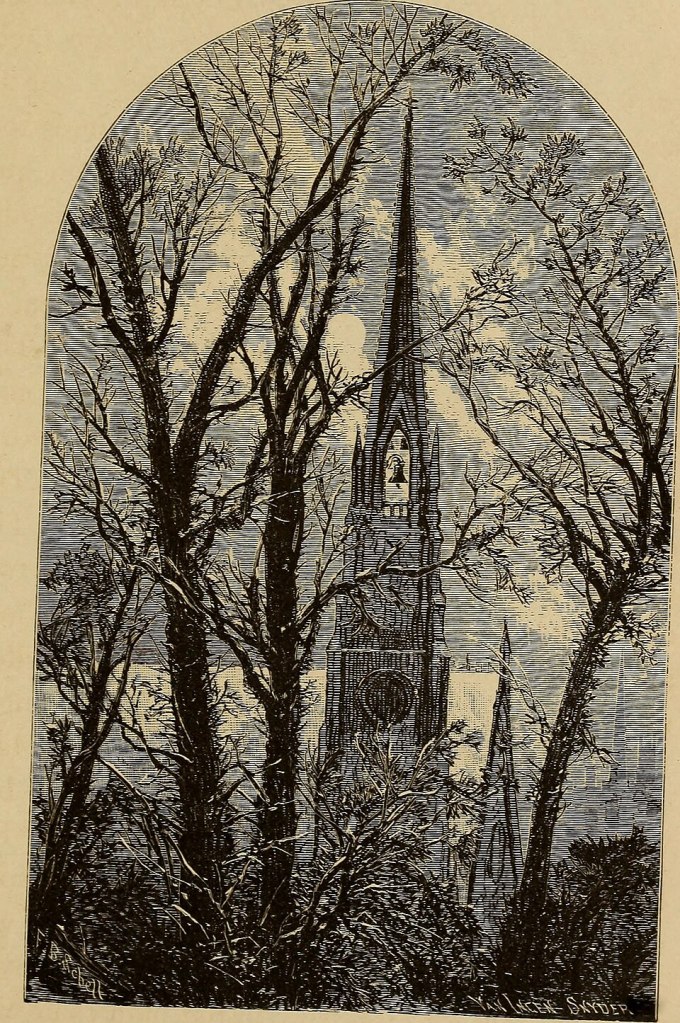
Two brothers hope to attend a Christmas Eve service at a great church, where the chimes are said to ring only when a truly worthy gift is laid on the altar. But the brothers have little to offer. Pedro has a small silver coin, while his brother stays behind to care for an old woman they have found half-frozen in the snow.
At the church, wealthy visitors bring gold, precious jewels and even the king’s crown, each hoping to be the one whose gift will make the chimes ring. Against this grand procession, the brothers’ small acts of generosity seem almost insignificant. It is a serious story, with a clear religious setting, but Alden lets the contrast between the offerings carry much of its meaning.
Save it for an evening when nobody is hurrying. It makes a thoughtful change of pace after the more playful Santa stories.
A question to ask: Pedro takes his small silver coin to the church, while his brother stays behind to care for the old woman they have found in the snow. Which of these do you think shows greater generosity, and why?
6 Classic Christmas Poems and Carols to Read Aloud with Children
Christmas verse is made for reading aloud. The rhythm and rhyme carry the words along, and a familiar refrain soon has children joining in. You don’t need to explain every line. Read a poem once and see what catches their attention; if they like it, read it again.
Some of these are poems to read, and some are carols you may prefer to sing.
Old Santeclaus with Much Delight — Anonymous
Published anonymously in 1821, two years before Moore’s famous poem, Old Santeclaus with Much Delight is one of the earliest printed depictions of Santa arriving on Christmas Eve by reindeer. This earlier Santa is a little more stern than the one children know today: he rewards well-behaved children and leaves a birch rod for those who have been naughty.
It is shorter and simpler than A Visit from St. Nicholas, which is part of its charm. Children meet an earlier version of a character they know well, and can notice what has stayed the same and what has changed. Many are surprised to learn that Santa was still taking shape in the early nineteenth century.
Read this one first, so that Moore’s poem arrives a day or two later as the version everyone knows.
A question to ask: What is the same about this Santa and the one in A Visit from St. Nicholas? What seems different?
A Visit from St. Nicholas — Clement Clarke Moore
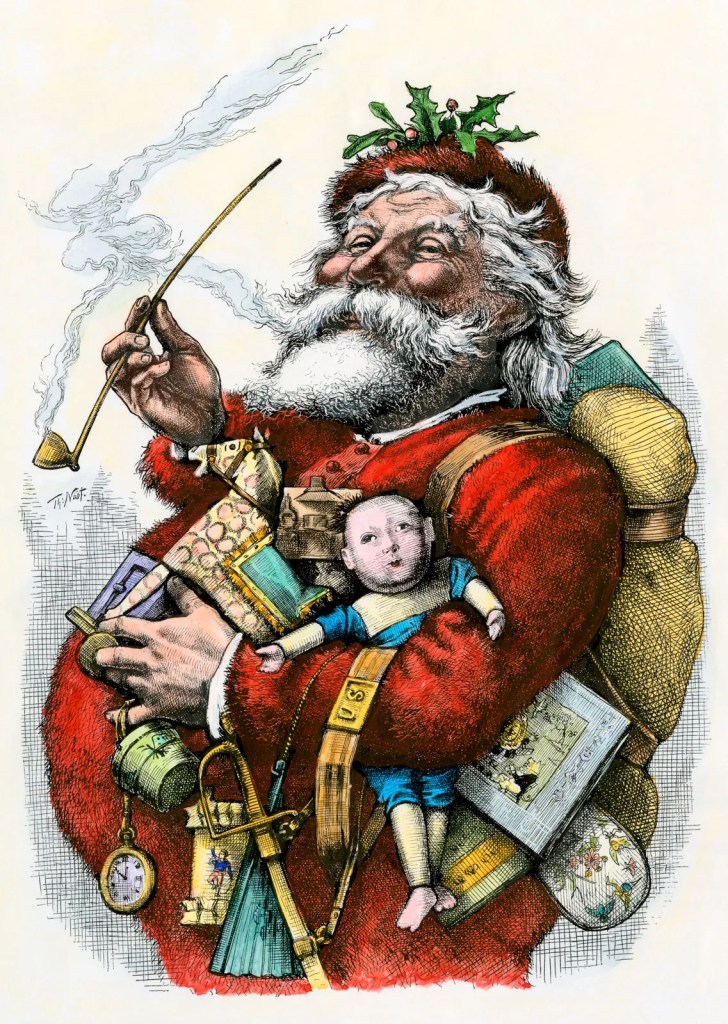
Few Christmas poems are as familiar as A Visit from St. Nicholas, better known by its opening line, “’Twas the Night Before Christmas”. A father wakes on Christmas Eve to a clatter outside and finds Santa and his reindeer on the roof.
The details are the ones children remember: the little sleigh, the stockings, the chimney, Santa’s sudden arrival. The strong rhythm gives the poem real momentum aloud, and even children who know it by heart often love hearing it again.
Much of the Santa we picture today owes a debt to these lines. The poem was first published anonymously in 1823 and is traditionally attributed to Moore.
A question to ask: Which detail of Santa’s visit does the poet describe most vividly?
The Night After Christmas — Anonymous
If A Visit from St. Nicholas captures the excitement of Christmas Eve, The Night After Christmas imagines the rather less glamorous morning after. The children are tossing and turning, suffering from the effects of too much pie and candy, when a late-night visit from Dr. Brough brings an unexpected end to the festivities. His prescription is blunt: no more nuts, raisins, pies or candy. Toys and books, he suggests, would make much better Christmas gifts.
Written as a comic counterpart to Moore’s famous poem, it follows the same familiar rhythm and opening scene, but turns the excitement of Santa’s visit into a warning about Christmas overindulgence. Children who know the original will enjoy recognising the borrowed lines and discovering where the story goes instead.
A question to ask: By the morning after Christmas, the children are suffering from too much pie and candy. Do you think the poem is right to warn against having too much of a good thing? What Christmas treats would be hardest for you to stop eating?
Jolly Old Saint Nicholas — Emily Huntington Miller
This well-loved song began as a poem, published by Emily Huntington Miller in 1865. A child leans close to Santa and whispers what she hopes he will bring.
The poem is playful and conversational, and its simple rhythm and direct address make it easy to read aloud. Many children will know the tune. After the other Santa poems, it offers a change of angle: here the excitement belongs to the child making the wishes, not to Santa on his rounds.
A question to ask: If you could whisper one secret wish to Santa, what would it be?
Good King Wenceslas — John Mason Neale
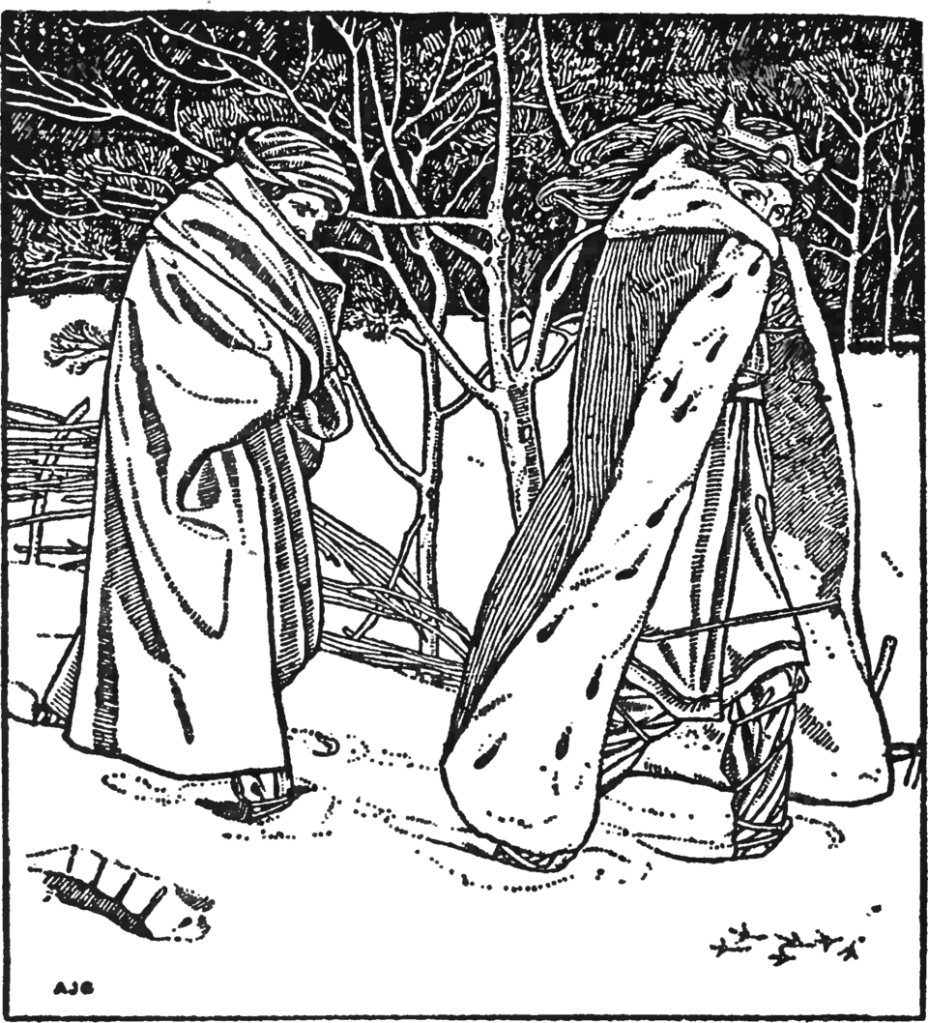
John Mason Neale wrote this carol in 1853, taking as his hero a tenth-century duke of Bohemia who came to be remembered as a good king. On the day after Christmas, the Feast of Stephen, the king looks out over the snow and sees a poor man gathering firewood. He decides to carry food, wine and pine logs to the man’s door himself, with his page following behind.
It is a story in verse, with a clear beginning and a warm ending, so it is easy to follow aloud even for children who only know the tune. The part they tend to remember is the page struggling through the deep snow, and what happens when he steps into the king’s footprints. Though the carol is set on the day after Christmas, its generosity sits comfortably beside Tilly’s Christmas and Why the Chimes Rang.
A question to ask: The king could have sent a servant with the food and wood. Why do you think he went himself?
The Three Kings — Henry Wadsworth Longfellow
Longfellow’s poem, published in 1863, follows the journey of the Magi. After the Santa poems it is quieter and more reflective, and it shows that a Christmas poem need not be about presents or Christmas Eve at all. The journey gives the poem a sense of distance and purpose, while the gifts the kings carry remind us of the religious significance of their visit.
Some of the language will be unfamiliar, and that is no reason to skip it. Read it through first, then explain a word or an image if your child asks. Children often notice something quite different from what you expected.
A question to ask: What do you think the journey meant to the Three Kings? What might have made it worth travelling so far?
How to Start a 12-Day Christmas Reading Tradition

You could read one selection each day, but I wouldn’t make it a rule. December fills itself up. There will be evenings when everyone is out or tired, and the only reading anyone can manage is a short poem at the kitchen table.
Here is one possible order. It mixes verse and story, and keeps a few related readings close together.
| Day | Reading |
| 1 | Old Santeclaus with Much Delight |
| 2 | Tilly’s Christmas |
| 3 | A Visit from St. Nicholas |
| 4 | The Night After Christmas |
| 5 | The Peterkins’ Christmas-Tree |
| 6 | A Kidnapped Santa Claus |
| 7 | Jolly Old Saint Nicholas |
| 8 | Little Girl’s Christmas |
| 9 | Good King Wenceslas |
| 10 | Christmas Every Day |
| 11 | The Three Kings |
| 12 | Why the Chimes Rang |
A few simple adjustments can make the reading easier to keep up:
- Choose a time that already works for your family. After dinner or just before bed suits many households, and it needn’t be the same time every night. If you’re hoping to make reading aloud a more regular part of family life, I’ve shared a few ideas for building a read-aloud habit that lasts.
- Let longer stories take longer. Stop A Kidnapped Santa Claus at a natural pause and pick it up tomorrow.
- Read poems twice. A second reading often lets children join in or notice what they missed.
- Let children choose. A child who wants A Visit from St. Nicholas three times in a row is making a perfectly good reading choice.
- Keep the conversation light. One question is plenty, and sometimes a child has a good deal to say without being asked anything. If you’d like more ideas for getting children talking about what they read, take a look at The Reading Lantern’s Conversation Cards.
Spread the twelve across Advent, save them for the Christmas holidays, or pick a handful for the week before. The traditional Twelve Days of Christmas begin on Christmas Day, but your reading plan needn’t follow that calendar.
And if these stories leave you wanting to explore more older literature with your children, our guide to choosing classic books for children offers some pointers for finding books worth sharing.
The Reading Lantern’s Classic Christmas Read-Aloud Collection
The best part of a read-aloud is the conversation afterwards: the odd remark, the question you didn’t expect, the line a child asks to hear again.
The Reading Lantern’s Classic Christmas Read-Aloud Collection is designed to help you make room for those conversations without having to prepare everything yourself.
The collection brings all twelve selections together in one place. Each story and poem has its own discussion questions, selected vocabulary with definitions, and extension activities. You can open the collection and begin reading without planning a lesson or searching for supporting material.
Use the questions when you’d like help starting a conversation, choose an activity for a quiet afternoon, or simply read the story and leave the rest for another night.
Explore the Classic Christmas Read-Aloud Collection
Christmas Read-Aloud Frequently Asked Questions
What are the best classic Christmas stories for children?
It depends on the child. For family comedy, try The Peterkins’ Christmas-Tree. For fantasy and adventure, choose A Kidnapped Santa Claus. Tilly’s Christmas and Why the Chimes Rang are more reflective, while Christmas Every Day has a premise children can easily imagine for themselves.
Choose by interest and listening stamina rather than age alone. A child can enjoy a story read aloud long before they could manage its language independently.
What Christmas poems can I read aloud with my children?
Begin with A Visit from St. Nicholas if your children already know it, then try Old Santeclaus with Much Delight alongside it for comparison. Jolly Old Saint Nicholas is a familiar song that began as a nineteenth-century poem. For something quieter, try Longfellow’s The Three Kings, or Good King Wenceslas for a story in verse.
There is no need to analyse a poem with children. Read it aloud, enjoy the sound, and see what they notice.
What age are these Christmas read-alouds for?
The collection is designed for children aged 6 to 9. The poems and shorter stories also work well with slightly younger listeners, and a longer story such as A Kidnapped Santa Claus can be split across evenings.
How do I start a Christmas reading tradition?
Start with one story or poem your children are likely to enjoy, at a time that fits naturally into your day. Keep the first few readings short enough that everyone wants to come back, and add more once the habit takes hold.
If you miss a few evenings, simply pick up where you left off.
Are old-fashioned Christmas stories suitable for modern children?
Most are, though some need a little help from an adult. Older stories contain unfamiliar words, customs and attitudes, and not every classic suits every child, so it’s worth reading ahead if you’re unsure.
Don’t assume old-fashioned language will put children off. A child who can’t follow every sentence may still be absorbed by the characters and the plot. Read at a comfortable pace, explain what gets in the way, and let the story do the rest.
You don’t need to read all twelve, or build a perfect routine around them. Choose a story, settle in with your children, and enjoy a little shared reading this Christmas.
Enjoyed this list? If you’d like to try The Reading Lantern method before committing to a full year of guides, start with a free sample from The Reading Lantern — three classic stories, discussion questions, and family activities ready to use tonight.

