Discover eight Hans Christian Andersen fairy tales to read with children, from the comic Emperor’s New Clothes to the heartbreaking Little Match Girl, with tips for choosing and discussing each story.
By Elizabeth, Creator of The Reading Lantern
Published October 2026 · Updated October 2026
Choosing a fairy tale to read aloud can be harder than it sounds. Some are over just as you’ve settled in; others take several evenings to finish. And while a child might laugh at a foolish emperor, that same child might find a story about a lonely girl freezing in the snow difficult to put aside.
If you want something short and silly for tonight, read The Princess and the Pea. If your child likes arguing about what’s fair, try The Emperor’s New Clothes. If they’d rather have an adventure that stretches over a few evenings, Thumbelina is a good choice. Andersen’s stories range from very funny to properly heartbreaking. Here are eight worth reading with children, from quick comic tales to stories that may call for a little more thought and conversation afterwards.
What Makes an Andersen Fairy Tale Worth Reading?
Andersen’s narrator is half the fun. He’s dry, a little mischievous, and often tells you things the characters haven’t worked out yet. In The Emperor’s New Clothes, you know from the start there’s no cloth, so the pleasure is watching one official after another decide it’s safer to admire it. A six-year-old gets the joke immediately. An adult notices how quickly everyone goes along with it.
The Ugly Duckling is a different animal, and much less comfortable than its reputation suggests. The duckling is pecked, chased and nearly frozen before anything good happens. It’s a harder story than the familiar lesson to “be yourself” might suggest.
The eight stories I’ve chosen aren’t a definitive ranking of Andersen’s most famous tales. They’re a selection for reading aloud together, chosen for their variety, their suitability for family reading and the questions they leave a child and parent to explore. Some are funny, some are unsettling, and not all end happily.
Andersen’s stories have a particular flavour: their strange turns, unsentimental treatment of suffering and endings that don’t always resolve neatly. If you’d like to explore fairy tales beyond Andersen, our guide to the best fairy tales to read aloud with children covers a wider range of traditional stories and offers more places to start.
The Best Hans Christian Andersen Fairy Tales to Read With Children
Here’s the quick version. The tone labels are my own judgement, not age ratings, and they depend on the translation.
| Story | Good for | Tone |
| The Emperor’s New Clothes | Humour and a good argument | Comic, with a sharp edge |
| The Princess and the Pea | A short, silly read | Light and absurd |
| Thumbelina | Adventure over several evenings | Varied, with some unsettling moments |
| The Ugly Duckling | Belonging and change | Painful at times, ends happily |
| The Daisy | A quieter, less familiar story | Poignant |
| The Brave Tin Soldier | Bittersweet storytelling | Melancholy |
| Five Peas from a Pod | Something unfamiliar | Reflective |
| The Little Match Girl | A difficult story, read with care | Deeply sad |
The Emperor’s New Clothes — a story about vanity and conformity
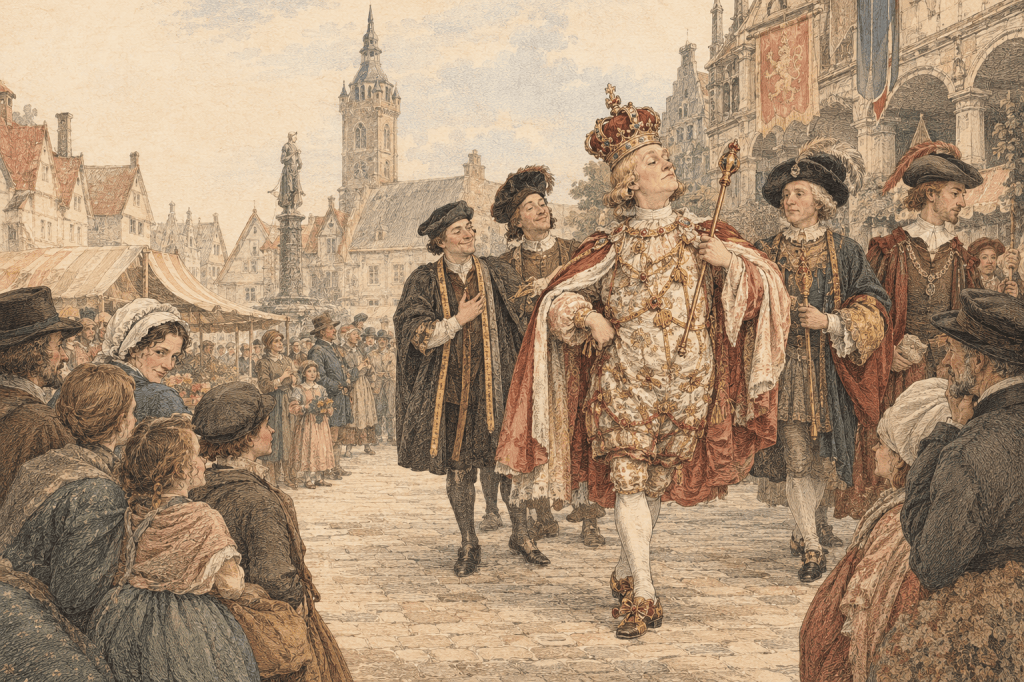
Two swindlers claim to weave cloth that can’t be seen by anyone who is unfit for their job or hopelessly stupid. There is no cloth, but nobody wants to be the one to say so: first an old minister, then another official, then the emperor himself. It works well aloud because of the repetition. Each visitor to the loom goes through the same private panic, and children soon see it coming and enjoy being ahead of the adults.
Pay attention to the ending. When a child says the emperor has nothing on, the crowd whispers it along, the emperor suspects they’re right, and he carries on with the procession anyway. Nobody is rescued by honesty.
Try asking: Why do the adults pretend to see something they don’t?
The Princess and the Pea — a short tale with an absurd premise
A prince wants a real princess but can never be sure who the real princesses are. A soaked girl turns up at the castle gate during a storm and says she’s one. The queen’s test is to put a single pea under twenty mattresses and twenty feather beds. In the morning the girl reports a dreadful night, black and blue from something hard. The pea ends up in a museum.
It takes a few minutes, so it’s easy to read in one sitting, and the straight-faced narrator is the best part: he insists, with a perfectly serious face, that the whole thing is true. If your child objects that nobody could feel a pea through all that bedding, don’t defend the story. Just agree it’s ridiculous. It’s supposed to be.
Try asking: Why do you think Andersen made the test so extreme?
Thumbelina — a journey through a world of larger characters
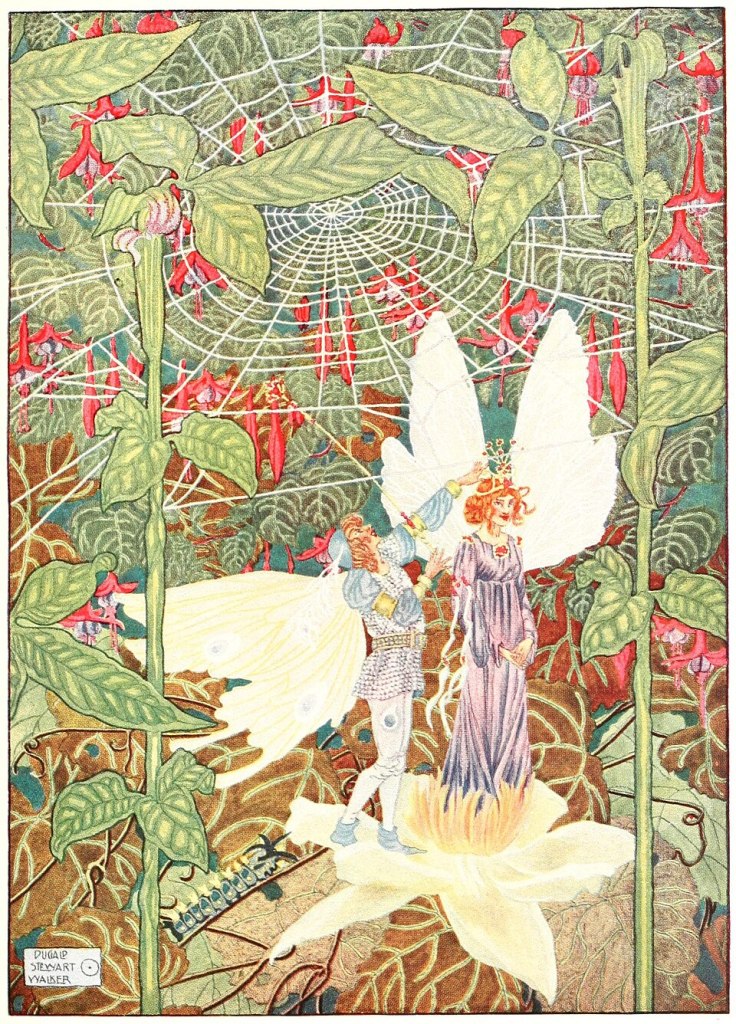
Thumbelina is born from a barleycorn and is no bigger than a thumb. Almost everyone she meets decides what should happen to her: a toad carries her off as a bride for her son, a beetle abandons her when his friends call her plain, and a field mouse plans her marriage to a rich mole. Thumbelina longs to be free, and eventually helps a swallow she has nursed back to health.
It’s the longest of the lot, and it has real menace in it, so preview it if your child doesn’t like being kidnapped, even by a toad. The mole’s underground home is a natural place to stop for the night. As you read, notice how often Thumbelina’s wishes count for less than other people’s plans.
Try asking, after the toad: What choice does she have here?
Create a childhood full of good books
Enjoying this article? Want more ideas for sharing classic stories with your children?
Sign up for The Reading Lantern‘s newsletter for thoughtful book recommendations, read-aloud inspiration and practical ideas to help you get more from the books you read together.
The Ugly Duckling — rejection, transformation and belonging
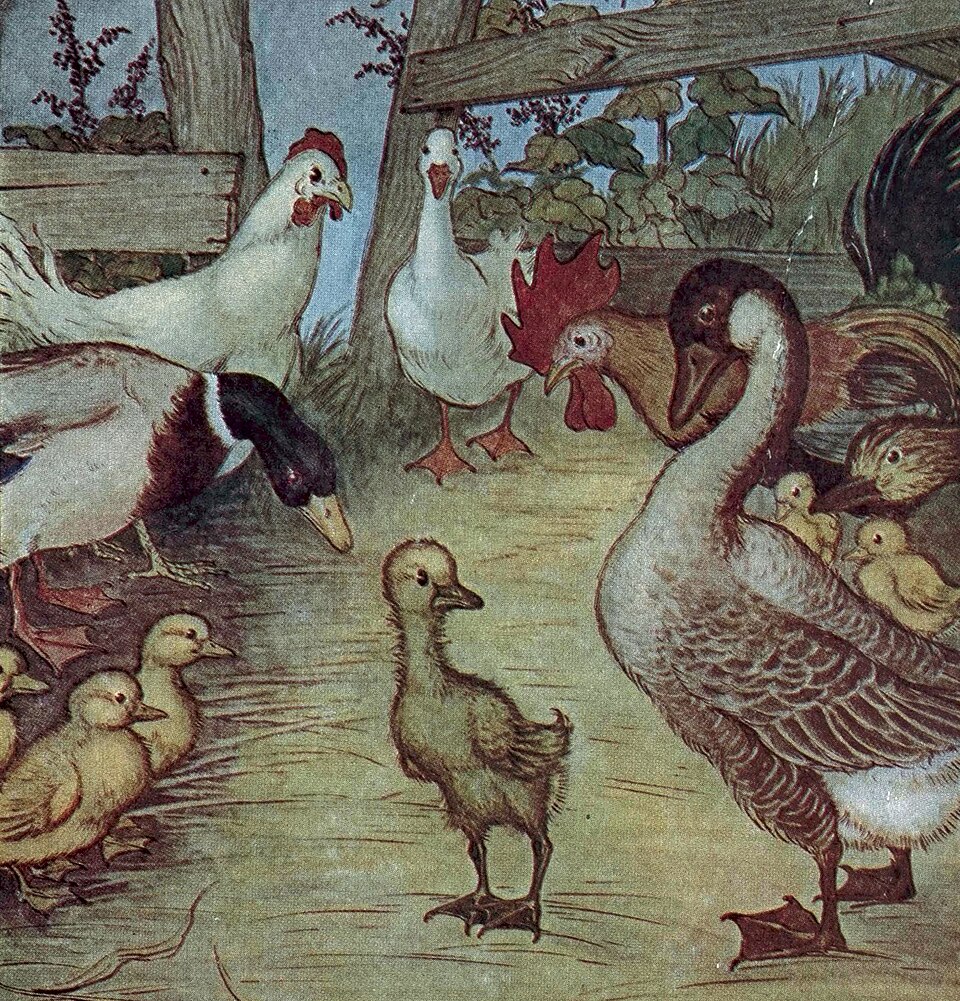
A duckling hatches in a farmyard and is bullied by the ducks, the hens and his own siblings. Even his mother, who sticks up for him at first, eventually wishes he’d go away. He runs off, survives a hard winter, and finally sees swans and realises he’s one of them.
There’s an uncomfortable question beneath the happy ending: he was always a swan, so the story can sound as though he’s accepted only once he turns out to be beautiful. Some children notice this on their own and don’t like it. Let them say so. The happy ending doesn’t erase the cruelty he endured along the way.
Try asking: What changes by the end: the duckling, the way others see him, or the world he belongs to?
The Daisy — a quieter story that rewards close attention
A daisy grows on a grassy bank beside a grand garden. She isn’t jealous of the fancy flowers, and she’s thrilled when a lark sings to her. Then boys catch the lark and shut him in a cage, and the daisy is cut out with a square of turf and put into the cage with him.
The daisy delights in small things, while the people around her barely notice the life they’re disrupting. The lark dies, and the daisy withers too. Neither the daisy nor the lark is treated as a living creature with a life of its own. The story asks whether we value a living thing for what it is, or only for the pleasure it gives us.
Try asking: Who did the most for the lark? Who got thanked?
If you’d like to read Andersen together without preparing everything yourself, The Reading Lantern’s collection brings eight fairy tales together with guided discussion questions, vocabulary and extension activities, ready to use alongside your reading.
The Brave Tin Soldier — steadfastness in an uncertain world
Of twenty-five tin soldiers cast from one old spoon, the last has only one leg because the tin ran out. He falls in love with a paper dancer in a toy castle, is blamed by a goblin, and finds himself swept through a series of misfortunes before a fish carries him back to the house. Then a boy throws him into the stove for no reason at all.
The soldier does almost nothing wrong, and nothing he does changes what happens to him. He’s steady throughout, but the world isn’t. The soldier’s stillness makes him an unusual hero: he cannot explain himself, escape his troubles or ask anyone for help. That can prompt an interesting question for children: is his courage a matter of bravery, patience, or simply having no choice?
The ending is brief, but it can be still be upsetting, so I’d think twice before reading it to a child who has just had a difficult day.
Try asking: Can someone be brave if they can’t change what happens to them?
Five Peas From a Pod — five peas, five different outcomes
Five peas sit in one pod, quite sure the whole world is green. Then the pod is picked and the peas are fired from a boy’s peashooter. One lands in a crack beneath an attic window, where it begins to grow. In the room lives a sick girl who spends much of her time in bed; watching the plant grow and flower brings her pleasure and hope.
This is the story I’d most recommend to a family that’s already read the famous ones. It’s unfamiliar, it’s short, and it’s quite different from The Princess and the Pea (despite the vegetables). Its focus is less on adventure than on the importance a small, overlooked thing can take on in someone else’s life.
Try asking: How does the little plant change the girl’s days?
The Little Match Girl — a powerful but difficult story
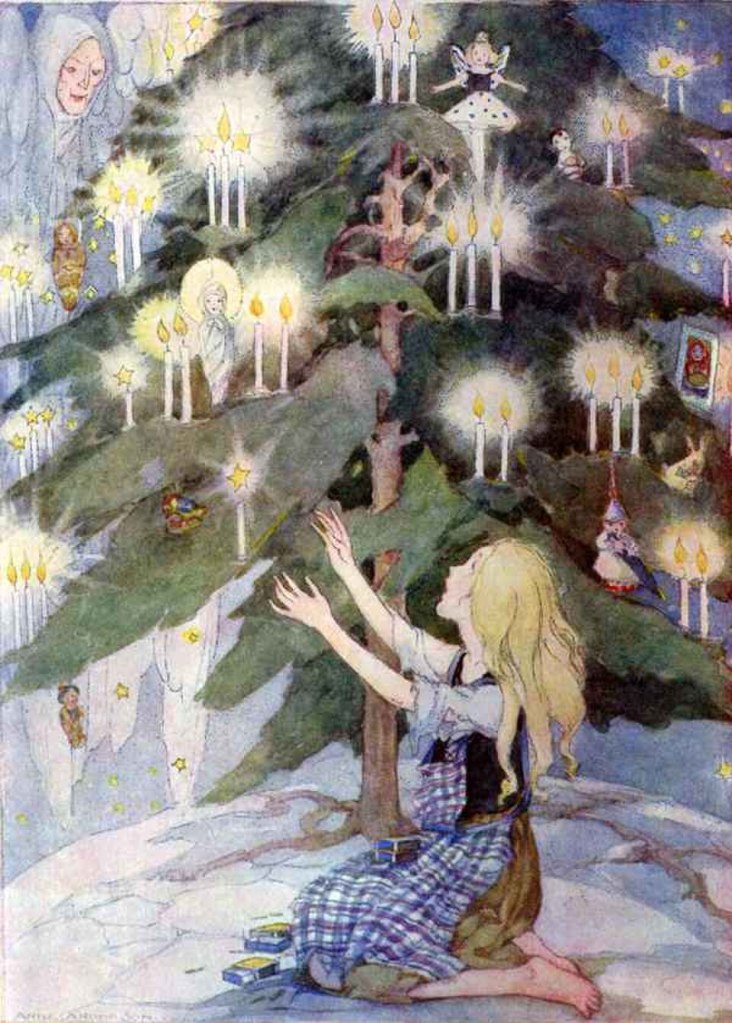
On New Year’s Eve a poor girl tries to sell matches in the snow. She’s barefoot, afraid to go home without any money, and she lights the matches one at a time to keep warm. Each flame shows her something: a stove, a feast, a Christmas tree, and then her grandmother, the only person who was ever kind to her. She lights the whole bundle to keep her grandmother there. In the morning she’s found dead, and passers-by remark that she must have been trying to warm herself.
This one is sad and doesn’t pretend otherwise. I’d read it first yourself, pick a daytime rather than bedtime, and leave time afterwards. If your child asks why nobody helped her, I found that, with my kids, “I don’t know” proved a better answer than a lecture on generosity. Some children won’t want to talk about it at all, and that’s fine.
Try asking: What was hardest to understand or accept about what happened to her?
Which Andersen Fairy Tale Should You Read First?
If you’re not sure where to begin, let your child’s interests guide you.
- For a child who loves absurdity and humour: Start with The Princess and the Pea.
- For a child who likes spotting what adults miss: Try The Emperor’s New Clothes.
- For a child who enjoys a longer adventure: Choose Thumbelina.
- For a child who asks questions about fairness and belonging: Begin with The Ugly Duckling.
- For a child who notices small details: Try The Daisy.
- For a child who likes thinking about courage and difficult choices: Read The Brave Tin Soldier.
- For a child ready for a more serious story: Consider The Little Match Girl, ideally when there’s time to talk afterwards.
You don’t need to find the perfect match on the first attempt. Read the opening aloud and see whether your child wants to know what happens next. If they do, keep going. If they don’t, try another story.
Are Andersen’s original fairy tales suitable for children?
Yes, many are, but suitability depends on more than a child’s age. Three things are worth considering: the language, the emotional content and the version you’re reading.
The language may be harder than the story itself.
Some older translations use unfamiliar expressions, long sentences or formal phrasing that can make a story harder to follow aloud. A child who understands the plot perfectly well may still need you to pause and explain a word or rephrase a sentence.
Emotional readiness matters, too.
Andersen doesn’t always protect his characters from rejection, suffering or loss, and he doesn’t necessarily provide a reassuring explanation at the end. Think about how your child responds to difficult events in stories. Do they like talking through uncomfortable questions, or do they tend to dwell on upsetting scenes? Their responses can help you decide which tales to read now and which to save for later.
Check which version you’re buying or borrowing.
A translation aims to convey Andersen’s writing in another language, while an adaptation may simplify the prose, shorten the plot or change particular details. Adaptations can be useful, especially for younger listeners, but they may lose some of the narrator’s irony or the ambiguity that makes the original interesting. If you can, read a sample before choosing.
You don’t need to read every story in its original form. Choose a version you and your child can follow and enjoy, and leave a story for another year if it isn’t a good fit just now.
A Simple Way to Talk About Andersen’s Stories Together
A few well-chosen questions can help a conversation get started, without turning story time into a lesson.
- What surprised you?
- Why do you think that character acted as they did?
- Was there anything you thought was unfair?
- What would you have done differently?
When we read The Emperor’s New Clothes, my six-year-old was chiefly amused by how foolish the emperor looked. My older child wanted to know why none of the adults had spoken up sooner. They’d heard the same story, but each had found something different to think about.
You don’t have to lead children towards a particular answer. Sometimes the most interesting part is hearing what they noticed first.
If you’d like more ideas for getting a conversation started, see our guide to Read-Aloud Questions That Spark Meaningful Conversations. And if you’d prefer a ready-made set of prompts to keep beside your book, The Reading Lantern’s Conversation Cards offer questions designed to help children notice, think, wonder, connect and discuss.
What to Look For in a Hans Christian Andersen Collection
Look for a range of stories, a translation you can comfortably read aloud, and enough variety to suit your child’s interests. The lesser-known tales can be just as rewarding as the familiar ones.
Andersen is a good reminder that children’s stories don’t always need to end neatly or deliver a simple lesson. The right tale can give a family plenty to talk about, even after the book is closed.
If you’re building a read-aloud bookshelf for this age, you’ll find more suggestions in our guide to 25 classic read-aloud books for ages 6–9, with stories to suit a range of interests and reading tastes.
Frequently Asked Questions
What is Hans Christian Andersen’s most famous fairy tale?
There isn’t one definitive answer. The Ugly Duckling, The Little Mermaid and The Emperor’s New Clothes are all widely recognised, though familiarity varies by country and by the adaptations people grew up with.
Which Hans Christian Andersen story should children read first?
For a short, silly story, try The Princess and the Pea. For humour with something to discuss afterwards, choose The Emperor’s New Clothes. For a longer adventure, start with Thumbelina.
What age are Hans Christian Andersen fairy tales suitable for?
There is no single age that suits every story or child. The translation, language and emotional content all matter. A younger child may enjoy The Princess and the Pea read aloud, while The Little Match Girl may call for more preparation and conversation afterwards.
Which Hans Christian Andersen fairy tales have sad endings?
The Little Match Girl has a tragic ending, while The Brave Tin Soldier is melancholy. The Daisy also ends sadly. By contrast, The Emperor’s New Clothes and The Princess and the Pea are comic tales.


Responses
[…] Hans Christian Andersen’s Fairy Tales From the comic The Emperor’s New Clothes to the bleak The Little Match Girl, Andersen often leaves readers with mixed feelings rather than a tidy ending. Translations vary considerably, and at seven, I’d choose individual tales rather than a whole collection, or explore our selected collection with eight stories to start with. See The Best Hans Christian Andersen Fairy Tales for Children […]
[…] Tales to Read Aloud with Children for a selection of traditional stories worth sharing together, or The Best Hans Christian Andersen Fairy Tales for Children for an Andersen-specific list. And if you’d like some help choosing what to read, The Reading […]
[…] and Andersen was not afraid of an ending that leaves a child feeling sad. (See our list of the best Hans Christian Andersen fairy tales for children for some ideas on where to […]