Discover the best classic books for 7-year-olds, from Pippi Longstocking to The Borrowers. Find stories to read aloud or enjoy independently, with tips for choosing.
By Elizabeth, Creator of The Reading Lantern
Published October 2026 · Updated October 2026
Seven was the hardest age to choose books for. My youngest son had outgrown picture books but hadn’t settled into anything else, and we disagreed constantly. He didn’t know what he wanted, and nothing I handed him seemed to be it. After a lot of research (and a lot of abandoned books), we finally found a routine, and it was the classics that got him reading again. Pippi Longstocking was the first to really land. That makes sense in hindsight: Pippi was exactly the sort of character he wanted to spend time with.
Some of these books are good choices for children to tackle on their own; others are better introduced as read-alouds, at least to begin with. I’ve included both, with notes to help you decide where to start.
Not every classic suits a seven-year-old, though, and the right one depends less on age than on the child. I’ve grouped this list by the kind of reader who tends to enjoy each book, with notes on length, language and whether it works best read aloud. For a wider age range, see the best classic read-alouds for children aged 6–9, or our lists specifically for six and eight-year-olds.
Where To Start
| If your child… | Start with… |
| Wants a proper adventure | The Railway Children |
| Likes magical mishaps | Five Children and It |
| Wants to enter another world | The Lion, the Witch and the Wardrobe |
| Enjoys miniature worlds | The Borrowers |
| Likes comic troublemakers | Pippi Longstocking |
| Loves outrageous humour | James and the Giant Peach |
| Is ready for a thoughtful story | The Hundred Dresses |
| Prefers shorter stories | Just So Stories |
| Likes debating fairness and choices | Aesop’s Fables |
These are starting points, not a ranking. If you’re unsure, begin with the kind of book your child already enjoys. It’s easier to stretch a familiar interest than to win someone over to an unfamiliar kind of story.
Not Sure Which Book Is Right for Your Child?
This list gives you 25 wonderful places to start — but choosing from a long list can still be surprisingly difficult.
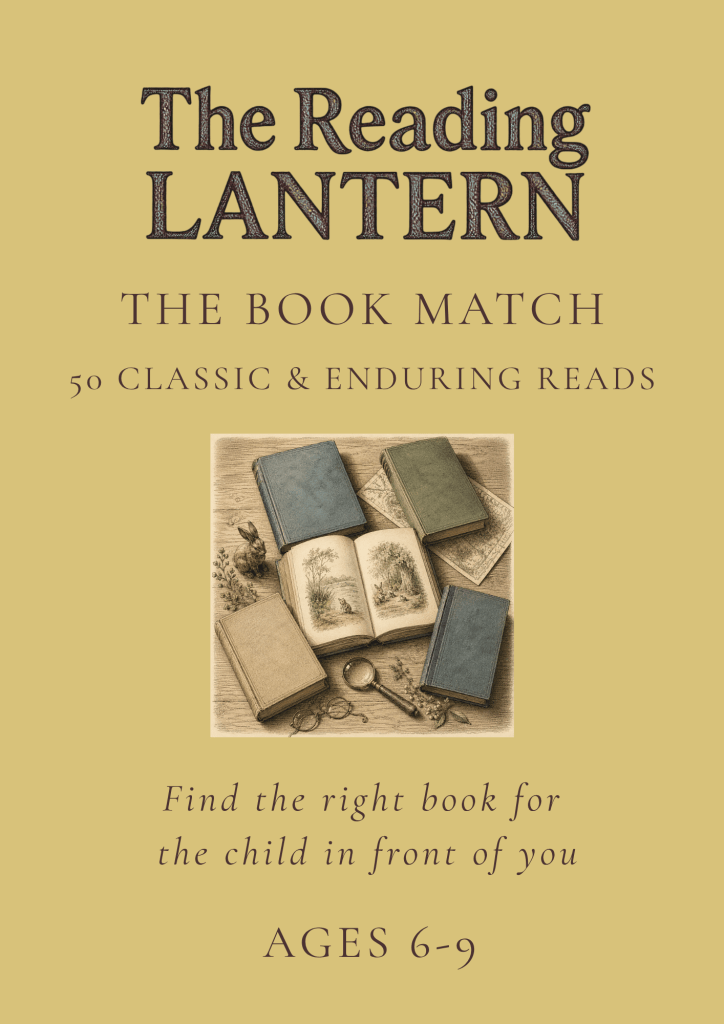
That’s why we created The Book Match: a 66-page guide to 50 classic children’s books for ages 6–9, organised by the kind of reader your child is.
Loves animals? Likes adventure? Has a big imagination? Loves to laugh? Ready for something more challenging?
Find the section that sounds like your child, then discover carefully chosen books that might be the right match.
50 classic books · 8 reader pathways · Book-by-book guidance
Find Your Child’s Book Match, in our official Etsy store →
Printable A4 PDF · Instant digital download
Are Classic Books Too Difficult for Seven-Year-Olds?
Sometimes. But it’s worth asking what exactly is difficult.
Decoding the words on a page and following a story are different skills. A child may read most of a book aloud fluently yet lose the plot, while another understands a story perfectly when listening even though the language is beyond what they could manage alone. Reading aloud removes the decoding burden and lets you explain a confusing sentence without making it feel like a test. A child may be able to follow a story long before they can read it comfortably on their own. When reading independently, they need to manage the words, sentence structure and plot all at once; when you read aloud, they can concentrate on the story itself.
Length is not a reliable guide either: a short fairy tale can be denser than a long adventure whose characters and setting are familiar.
To tell whether a book is a useful challenge or simply not working yet, read the opening aloud. Can your child follow who is doing what? Do they ask questions? Do they want to hear more? They needn’t understand every word, but if you’re explaining every paragraph and they’ve stopped listening, put it aside for now. Give a promising book a few sessions, but don’t feel obliged to finish one that consistently fails to hold their attention.
Your child might read a short book alone in the afternoon and listen to a more demanding novel at bedtime. Some evenings you’ll get through a chapter. Others involve a drink of water, a bathroom trip and a search for a missing teddy before you reach page four.
For more on why reading aloud is worth the effort, see Why Reading Aloud Still Matters or How to Build a Family Read-Aloud Habit.
The Best Classic Books for 7-Year-Olds
Think of this as a working shelf rather than a list to complete. Many of these books suit a range of ages, especially when read aloud.
For the Child Ready for a Longer Adventure
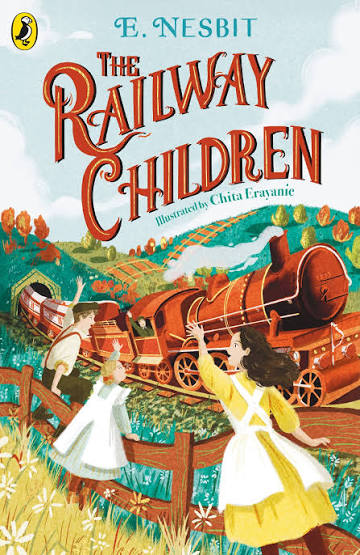
The Railway Children — E. Nesbit When their father is suddenly taken away, three children move to a house near a railway, where friendships, small kindnesses and a gradually unfolding mystery fill their days. Try it with a child who enjoys family stories and getting to know a place and its people. It isn’t fast-paced by modern standards, and some social attitudes belong to their time, so I’d start it as a read-aloud.
Five Children and It — E. Nesbit Five children find a sand-fairy who grants wishes, with consequences rarely what they expected. Wanting to be rich, beautiful or grown-up turns out to be more complicated than it sounds. The episodes suit short reading sessions, and children who enjoy a clever idea going comically wrong will love it. Some Edwardian expressions need explaining, but the episodic structure makes it easy to read a little at a time, either together or independently.
The Story of the Treasure Seekers — E. Nesbit The Bastable children set out to restore the family fortunes with schemes that seem sensible to them and considerably less so to the adults. The humour comes from the gap between their confidence and their understanding. It’s particularly enjoyable to share if you and your child like dry humour, though the period setting takes some getting used to.
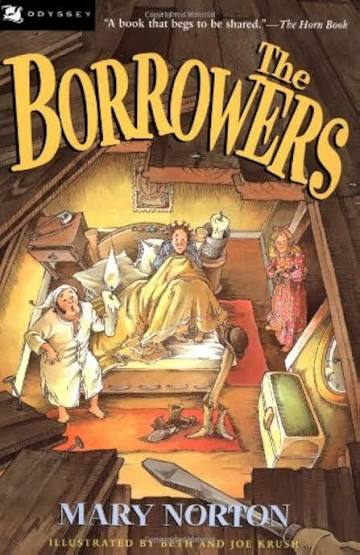
The Borrowers — Mary Norton The Clock family are tiny people living beneath the floorboards, borrowing what they need from the humans above. A pin, a matchbox or a scrap of paper becomes essential equipment. The appeal lies as much in the details of Borrower life as in the plot, so it rewards a child who likes looking closely. I’d happily read it aloud.
The Blue Umbrella — Ruskin Bond A shorter, more recent classic. In a Himalayan village, a girl acquires a striking blue umbrella that becomes the object of a neighbour’s envy. The story explores jealousy and generosity, and how a small possession can come to matter far too much. It’s a good choice for a child who wants a complete story without a long novel, and a change of setting from the English countryside of many older classics. The pace is quiet, so it suits a child who enjoys character over action.
For the Child Who Wants Magic and Another World
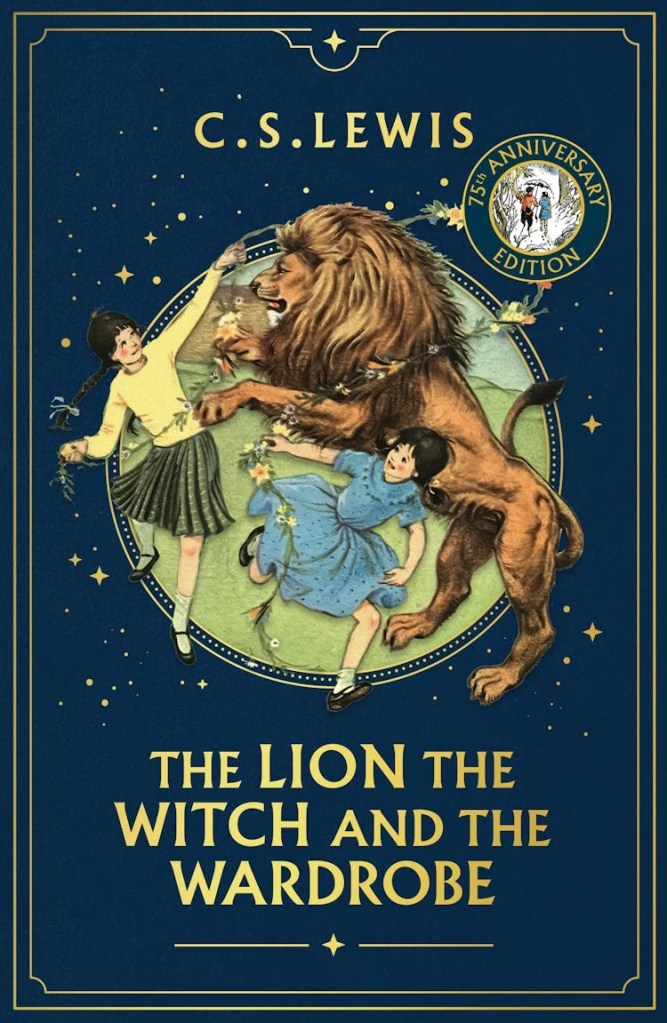
The Lion, the Witch and the Wardrobe — C. S. Lewis
Lucy steps through a wardrobe into Narnia, a land ruled by the White Witch, and her siblings follow. The clear central conflict and sense of discovery make it a strong first longer fantasy. Edmund’s behaviour prompts discussion without any preparation on your part. Some language and the religious symbolism may be unfamiliar, but neither needs explaining all at once. It’s an excellent read-aloud even for a child who reads independently.
The Princess and the Goblin — George MacDonald Princess Irene finds that her house is stranger than it looks, while Curdie, a miner’s son, uncovers a goblin plot beneath the mountain. This is more demanding than Narnia: the prose and dreamlike atmosphere need patience. Try it with a child who loves fairy tales and doesn’t need every question answered at once. I’d start by reading aloud.
The Wonderful Wizard of Oz — L. Frank Baum Dorothy is swept from Kansas to Oz, where she and her three companions set out to ask the Wizard for what they believe they lack. A sequence of strange places and memorable characters suits children who like an episodic journey. The book differs in places from the film, which is a pleasure in itself if your child already knows the movie. It works for independent readers and aloud.
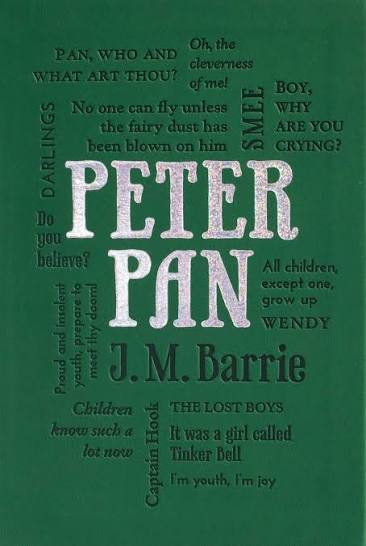
Peter Pan — J. M. Barrie
Wendy and her brothers follow Peter to Neverland, a place of pirates, mermaids and Lost Boys that is exciting, dangerous and rather strange. I’d be more selective with this one. Peter isn’t always a charming hero, and the story is darker and its tone harder to follow than softened adaptations suggest. For a child who enjoys the unusual and can handle a little darkness, try a good edition aloud before committing.
Create a childhood full of good books
Enjoying this article? Want more ideas for sharing classic stories with your children?
Join The Reading Lantern for thoughtful book recommendations, read-aloud inspiration and practical ideas to help you get more from the books you read together.
For the Child Ready for a More Thoughtful Story
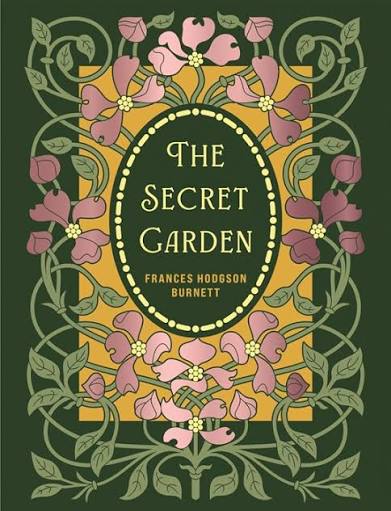
The Secret Garden — Frances Hodgson Burnett
Orphaned Mary Lennox arrives in England and gradually discovers a neglected garden, a hidden part of the house and a boy kept away from the world. Mary is disagreeable at first, and much of the pleasure is watching her become less self-absorbed. It’s a long, slow-moving book with older language and attitudes that may need context. At seven, I’d read it aloud over several weeks.
A Little Princess — Frances Hodgson Burnett Sara Crewe begins at a London boarding school in comfort, until her circumstances change abruptly. Her imagination in the face of hardship, and the cruelty of some of those around her, drive the story. It suits a child interested in fairness and in how people behave when their status changes, but it contains loneliness and harsh treatment, so consider how your child responds to injustice. I’d read this one aloud, too.
The Hundred Dresses — Eleanor Estes Wanda Petronski claims to have a hundred dresses at home, yet wears the same faded one to school every day. Her classmates tease her, and one girl who never joins in still has to reckon with her own part in it. Shorter than the novels in this group, it explores exclusion, embarrassment and regret without collapsing into a simple lesson about kindness. Read it together if you’d like to talk about the characters’ choices.
Heidi — Johanna Spyri Heidi goes to live with her grandfather in the Swiss Alps, then is taken to Frankfurt, and the contrast between the two places is central to the story. Children who like stories about home and belonging may love her open-hearted nature. The pace is gentle and the original text can feel old-fashioned in its moralising, so edition matters. I’d begin as a read-aloud.
Understood Betsy — Dorothy Canfield Fisher Cautious Elizabeth Ann goes to live with relatives in Vermont and discovers she can do far more than she thought. It suits a child who prefers everyday challenges and growing confidence to magic or high adventure. Some of its ideas about upbringing reflect its period. At seven, I’d start by reading it together, though confident readers may manage it alone.
For the Child Who Likes Mischief and Humour
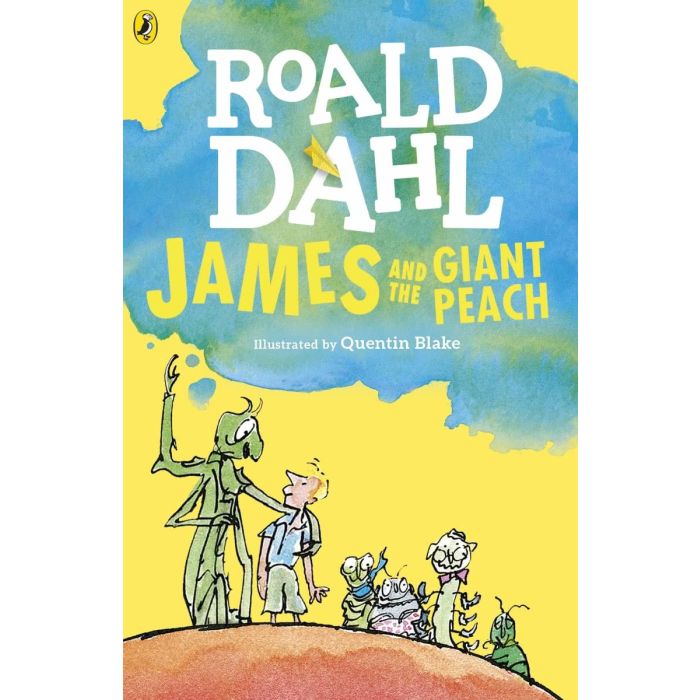
James and the Giant Peach — Roald Dahl
After a miserable start with his aunts, James escapes inside a giant peach with a crew of oversized insects. It’s lively, inventive and a great read-aloud, but the opening is bleak and some scenes are grotesque, so consider whether your child enjoys humour that mixes the ridiculous with the unpleasant.
George’s Marvellous Medicine — Roald Dahl George brews a medicine for his horrible grandmother, with ever more outrageous results. The pleasure is in the escalating chaos rather than a developed adventure, and it reads well in short sessions. It’s worth mentioning that enjoying George’s fictional mischief is not a licence to raid the kitchen cupboards.
The Worst Witch — Jill Murphy Mildred Hubble is a trainee witch with a talent for getting things wrong at exactly the wrong moment. Short chapters and clear comic set-ups make it a more manageable step into longer stories than the older fantasies here, and the humour needs no historical background. It suits independent reading for a child comfortable with chapter books, or a shared read if they prefer company.
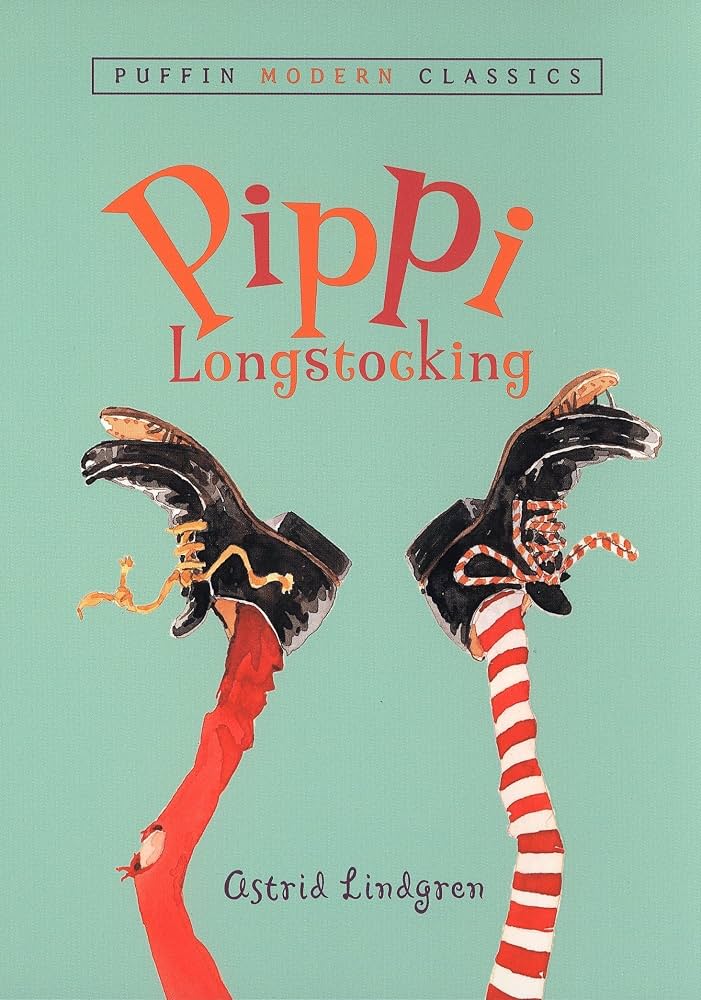
Pippi Longstocking — Astrid Lindgren
Pippi lives by her own rules, has extraordinary strength and treats adult expectations with cheerful disregard. The humour comes from her confidence and the absurd situations she creates. The episodic chapters are easy to take one at a time, whether you read together or your child tackles them alone.
For the Child Ready for Shorter Classics and Traditional Stories
Short stories aren’t a fallback for children who can’t manage novels. A tale can turn on one surprising choice, a repeated phrase or a sharp ending, and it’s handy when you have ten minutes and everyone is tired.
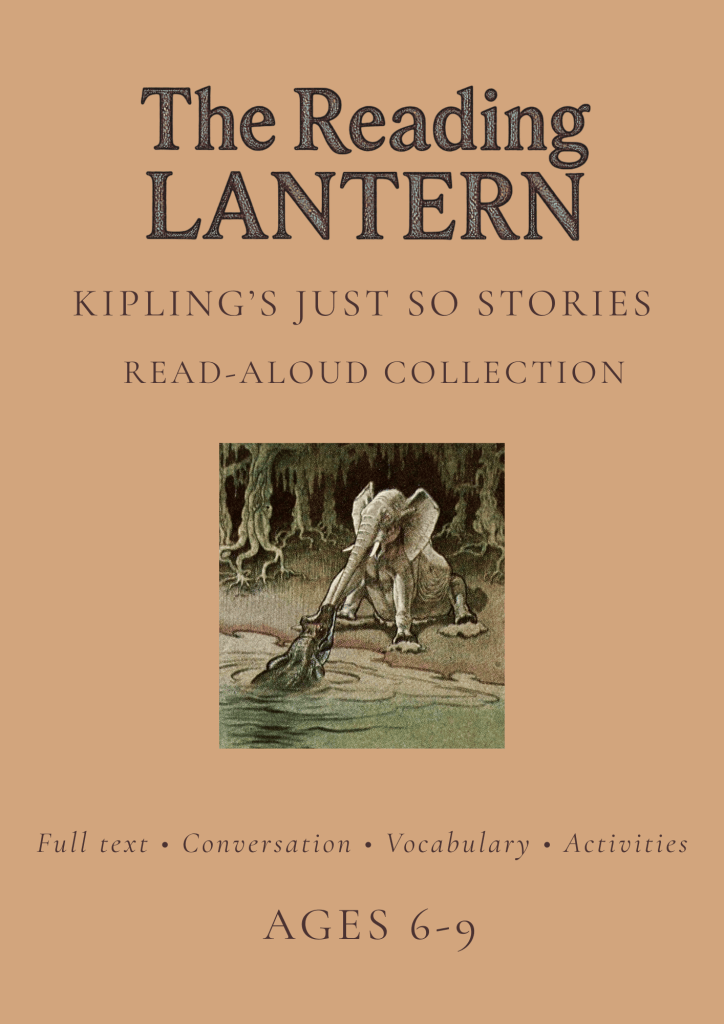
Just So Stories — Rudyard Kipling
Kipling imagines how animals got their distinctive features, from the whale’s throat to the leopard’s spots, in playful, rhythmic language full of repeated phrases. Good for children who enjoy wordplay and don’t mind fanciful explanations. Some attitudes are dated and the style is far from plain modern prose, so read these aloud first and let the rhythm do its work. See also Why Children Still Love Just So Stories.
Explore The Reading Lantern’s Kipling’s Just So Stories Read-Aloud Collection
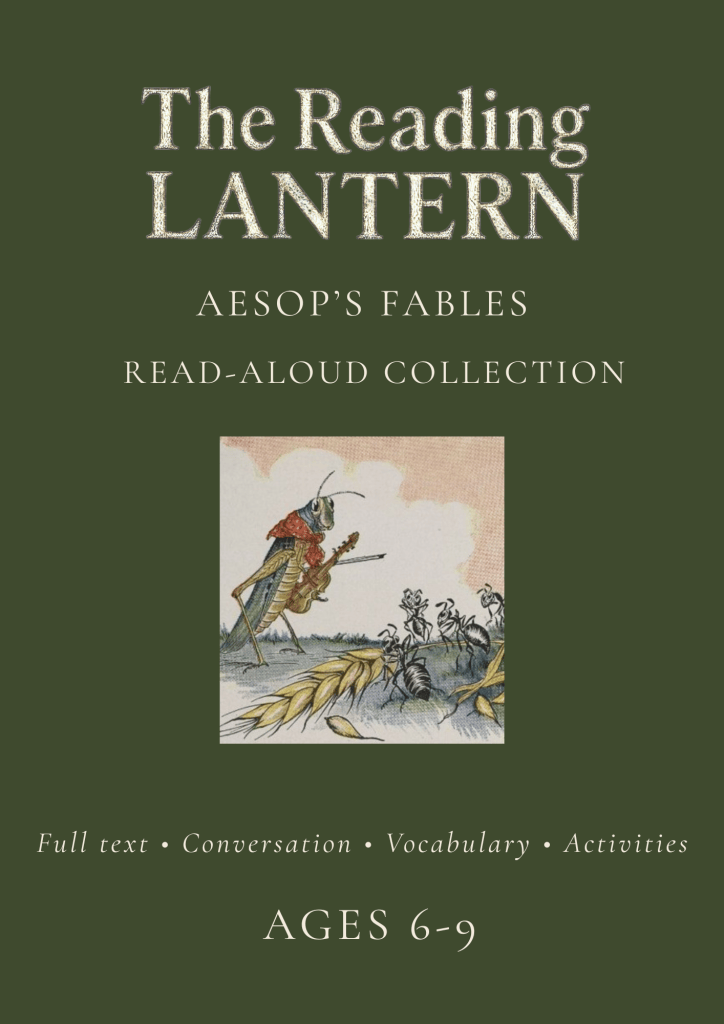
Aesop’s Fables
These brief tales turn on a boastful character’s mistake, an underdog’s resourcefulness or a sensible decision gone wrong. Some morals are open to argument, which is half the fun. Read a few aloud and ask which character your child agrees with. See our guide to Aesop’s Fables for Children: The Stories, Lessons & Read-Alouds Worth Knowing.
Explore The Reading Lantern’s Aesop’s Fables Read-Aloud Collection
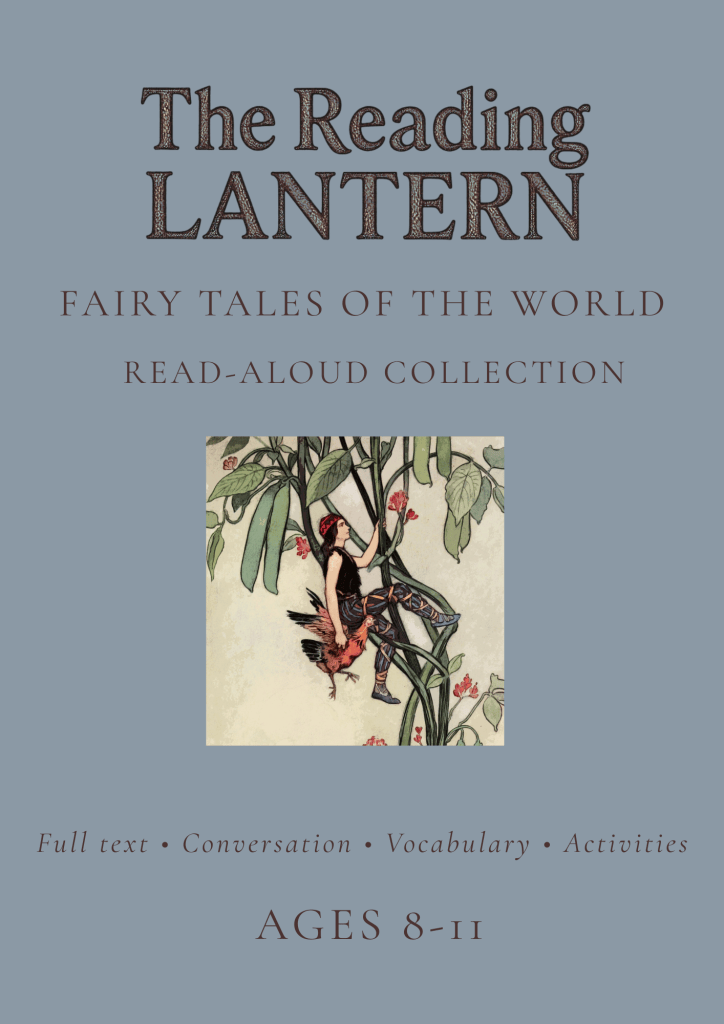
Andrew Lang’s Coloured Fairy Books Wicked stepmothers, enchanted objects and impossible tasks, with heroes who don’t always behave as modern ones should. Tales vary in length and tone, so you can pick to suit the occasion, but the original language can be challenging and some stories are violent. Choose a complete, readable edition, sample first, and don’t read in order. See our guide to The Best Fairy Tales to Read Aloud with Children
Explore The Reading Lantern’s Fairy Tales of the World Read-Aloud Collection
Hans Christian Andersen’s Fairy Tales From the comic The Emperor’s New Clothes to the bleak The Little Match Girl, Andersen often leaves readers with mixed feelings rather than a tidy ending. Translations vary considerably, and at seven, I’d choose individual tales rather than a whole collection, or explore our selected collection with eight stories to start with. See The Best Hans Christian Andersen Fairy Tales for Children
Explore The Reading Lantern’s Hans Christian Andersen Read-Aloud Collection
Old Greek Stories — James Baldwin retells myths of gods, heroes and monsters for young readers, in a world where pride, anger and ambition have serious consequences. Good for a child who likes mythology or asking why a character made a particular choice. The older prose takes some getting used to, and the myths include violence. Read aloud, explain names as they come up, and take the stories one at a time.
Explore The Reading Lantern’s Greek Mythology Read-Aloud Collection
Should You Still Read Aloud to a Seven-Year-Old?
Reading aloud still has a place at seven, even when a child is beginning to read independently. It’s a chance to discover a story together—to laugh at an absurd character, wonder what a character will do next or disagree about whether someone has behaved fairly.
In our house, reading time still has to compete with requests for water top-ups, extra trips to the bathroom and a suddenly missing teddy. We don’t always get far, but we keep coming back to it. For practical help, see How to Build a Family Read-Aloud Habit. If you’d like a plan ready to follow, take a look at the 52-Week Read-Aloud Guide.
Frequently Asked Questions
What are the best classic books for 7-year-olds?
It depends on the child. Try Five Children and It for comic magic, The Borrowers for a miniature world, The Lion, the Witch and the Wardrobe for fantasy, The Hundred Dresses for a shorter, thoughtful story, or Just So Stories for tales enjoyed one at a time.
What are the best chapter books for seven-year-olds?
The Worst Witch, Pippi Longstocking and Five Children and It are good places to start. Check the language and layout of the particular edition rather than relying on age labels.
Which classics are best read aloud?
The Railway Children, The Secret Garden, The Princess and the Goblin and The Lion, the Witch and the Wardrobe all reward listening before a child is ready to read them alone. Aesop’s Fables and Andersen’s tales suit evenings when you have less time.
Are classic books suitable for seven-year-olds who are still learning to read?
Yes. A child doesn’t have to read a book independently to enjoy it. Reading aloud lets children follow longer stories and older language while they develop their own reading skills. Choose a book that holds their attention, and let them listen or take turns reading if they prefer.
How do I choose an edition of a classic?
Check whether the text is complete, abridged, modernised or retold, then look at print size, illustrations and chapter length, and sample a few pages. For fairy tales, note the translator or reteller, as wording and tone differ widely.
Finding the Next Book to Read Together
There’s no single best classic for every seven-year-old. Start with a book that fits your child’s interests, read the opening together, and see whether they want to know what happens next.
For more options across interests and reading stages, browse the best classic read-alouds for ages 6–9, or try The Reading Lantern’s Book Match to find books suited to your child’s interests and reading stage.
Enjoyed this list? If you’d like to try The Reading Lantern method before committing to a full year of guides, start with a free sample from The Reading Lantern — three classic stories, discussion questions, and family activities ready to use tonight.


Responses
[…] you’re choosing specifically for a six, seven or eight year old, I’ve put together some more focused lists classic books, including chapter […]
[…] Best Classic Books for 7 Year Olds […]